
PETROPHYSICS EVALUATION: PERMEABILITY AND PORE THROAT ESTIMATION USING FUZZY LOGIC
1. Model Build and Data Distribution:
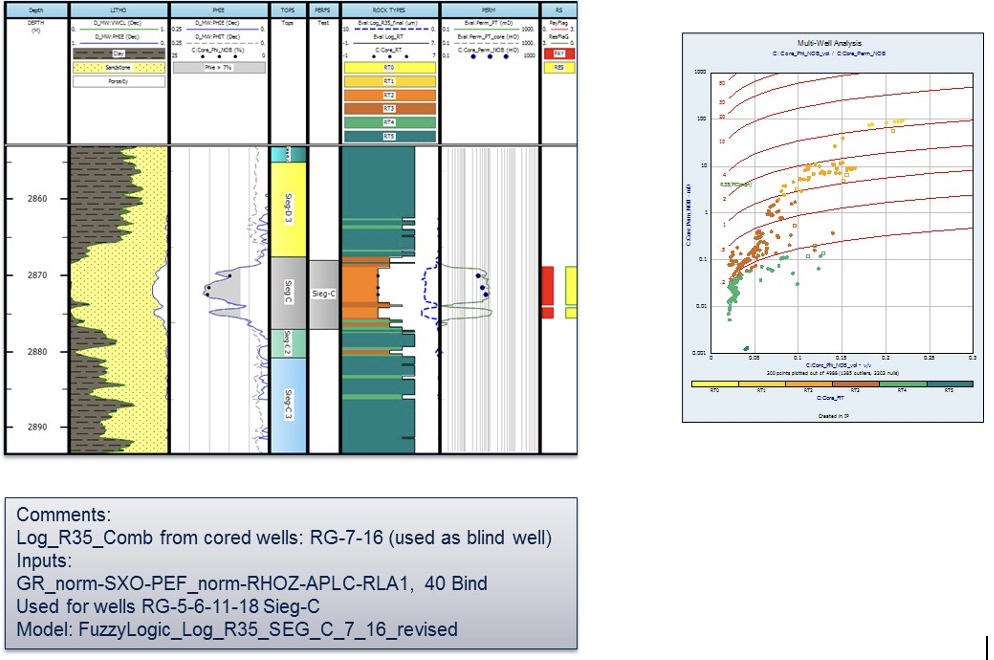
· The pore throat values are first divided into geo-categories (bins). Within each pore-throat category, a value is chosen as the best representative: Bins: 25 to 50. Perform a good model (the number of bins is directly related to the amount of available data). Details are shown in Figure 2.
· For a specific depth, the fuzzy possibilities should be determined separately for each of the measured logs.
· Their fuzzy possibilities are combined to calculate the combined fuzzy possibility for a specific bin.
The two highest fuzzy possibilities are taken as the most probable categories for those log measurements.
2. Fuzzy Model Results:
Through this iterative process, pore throats have been defined. On the permeability-porosity cross-plot (Figure 3, right), we can see different clouds, which show sub-parallel trends, resulting in a lees step of the total population, whose clouds are subdivided mainly by permeability value ranges. These pore throat arrangements present, in fact, a quite wide range of porosity but a relatively narrow range of permeability, allowing the rock type corresponding to each family pore throat line (based on Pittman R35 model. The Figure shows the final plot and porosity-permeability match, and on the right side shows the pore throat distribution according to Pittman R35 official equation in the field project.
Parameters applied: Log_R35_comb from cored wells, GR_norm, SXO, PEF_norm, RHOZ, APLC, and RLA1 curves.
The permeability-porosity cross plot for Pittman R35 pore throat ratio can be observed in the figure.
More insights
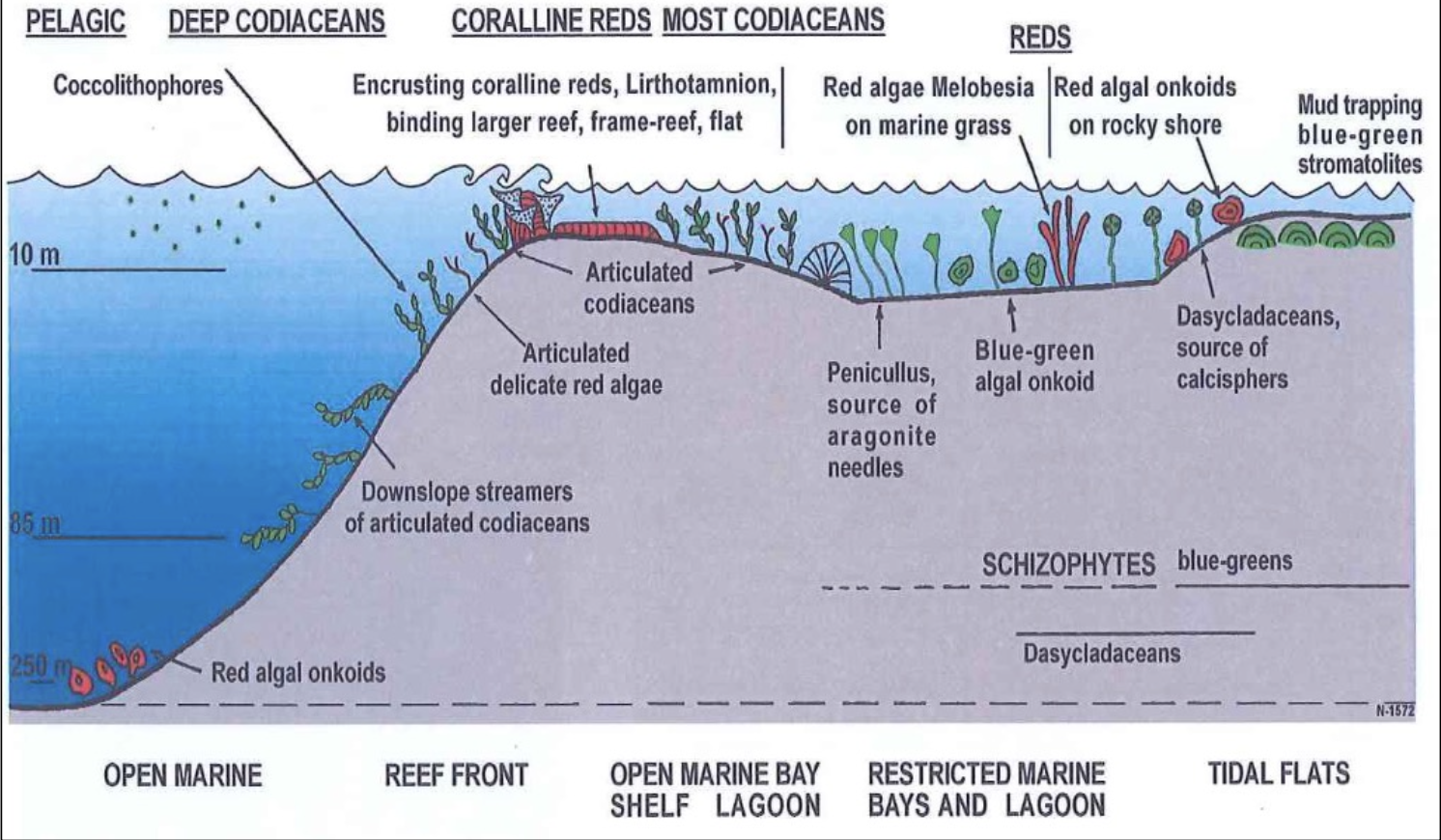
Carbonate Types
Definition: Most carbonates develop from biogenic sediments formed by biological activity, such as reef building and the accumulation of remains of organisms on the seafloor. Carbonate sediments are commonly produced in shallow, warm oceans either by direct precipitation out of seawater or by biolog

Dolomites, Dolomitization
Dolomite is one of the most abundant sedimentary carbonate minerals. For a wide range of temperatures (from 500 o C to 1100 o C). The stable calcite becomes progressively enriched in magnesium (dolomite) with increasing temperature. (Morse1990). The important fabric elements to recognize for petroph

Motivations of Independent Professionals (Freelancers) to Achieve Success
Independent Professionals (Freelancers) are a growing segment of the workforce, driven by a variety of motivations that propel them toward success. Understanding these motivations provides insight into the freelance mindset and the factors that contribute to their professional fulfillment. This essa